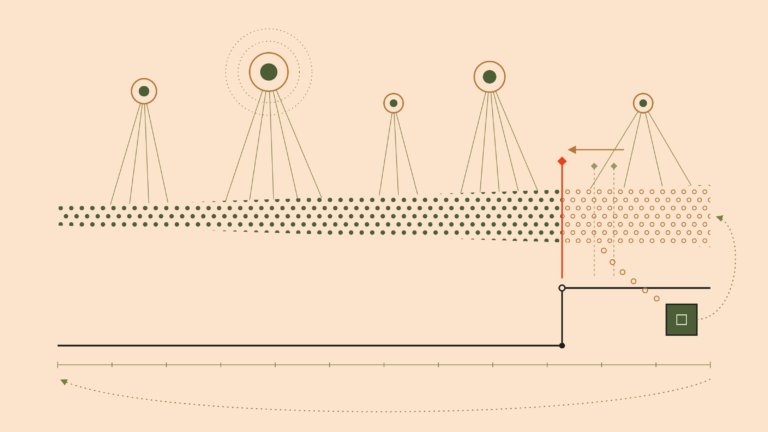
On rationing, queues and the open-access quota that runs out every autumn On 2 October 2026 the university library at Leiden sent its researchers a short notice. The annual allowance of open-access articles under the Dutch national agreement with Springer Nature would, it said, probably be exhausted on 9 October, and any author who wanted…
On the difference between sounding alike and thinking alike
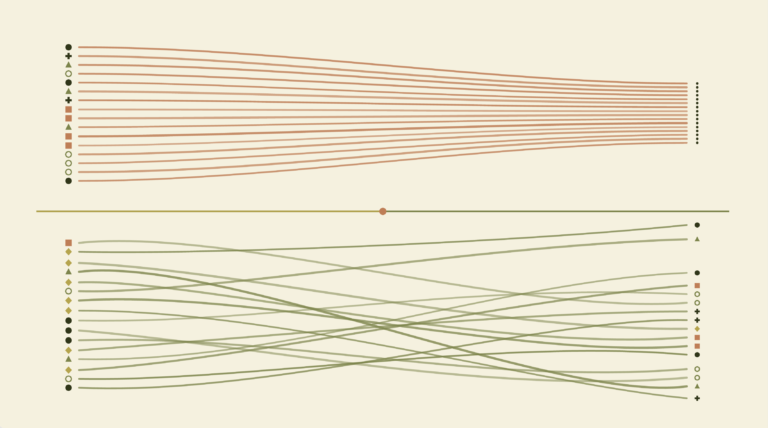
Nature has just published a long feature warning that generative artificial intelligence is flattening our collective imagination, and has done so without printing a single dissenting voice — an irony I leave the reader to enjoy. I want to take the feature by conceding its central empirical claim. The most useful number comes from Holzner…
What a game looks like from its second derivative
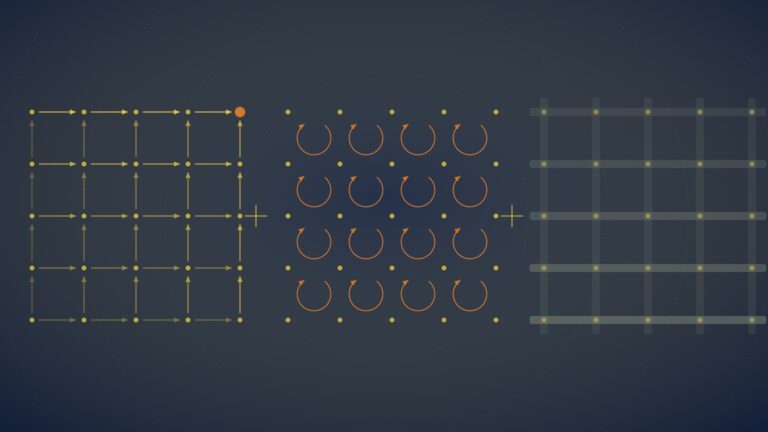
On my new paper, “Second-Order Potentials for Finite Games: Existence, Characterisation, and Game Decomposition” (arXiv:2608.01967) There is a small and very well-behaved class of games in which the entire strategic problem collapses into a single function. Instead of tracking what each of the players separately stands to gain or lose, one writes down one number…

Means-Testing in Reverse
Europe has learnt that it cannot afford another 2022. It has not learnt how to spend the money it does have. Consider two European households. The first is comfortable: two cars, a large house, a swimming pool that needs heating. The second is not: one small flat, no car, a boiler that is switched on…

Who Decides What a Good Is? Mazzucato’s Missing Question
Mariana Mazzucato has a new book. The Common Good Economy: A New Compass was published by Allen Lane earlier this month, and it is the culmination of a decade-long campaign against one of the quietest assumptions in economics: the idea that the properties of a good — whether it is rivalrous, whether it is excludable…
The Big GDP Debate: Wrong Units
A sustained and increasingly technical argument about European economic performance has been running across economics blogs and Substacks since early 2026. The starting gun was fired by Seth Ackerman in a series of posts in February — “Eurpoors vs. Florida Man,” “Europe’s productivity keeps outpacing the US,” and “Productivity statistics, Paul Krugman, and Hicks’s shadows…